Provisional Personality
The identity you build in the first half of life isn’t really yours. It’s assembled from parental imprinting, cultural scripts, and adaptive strategies you developed as a child to stay safe, loved, and accepted. People-pleasing, overachieving, withdrawal, control — these survival mechanisms crystallize into personality traits you mistake for who you are.
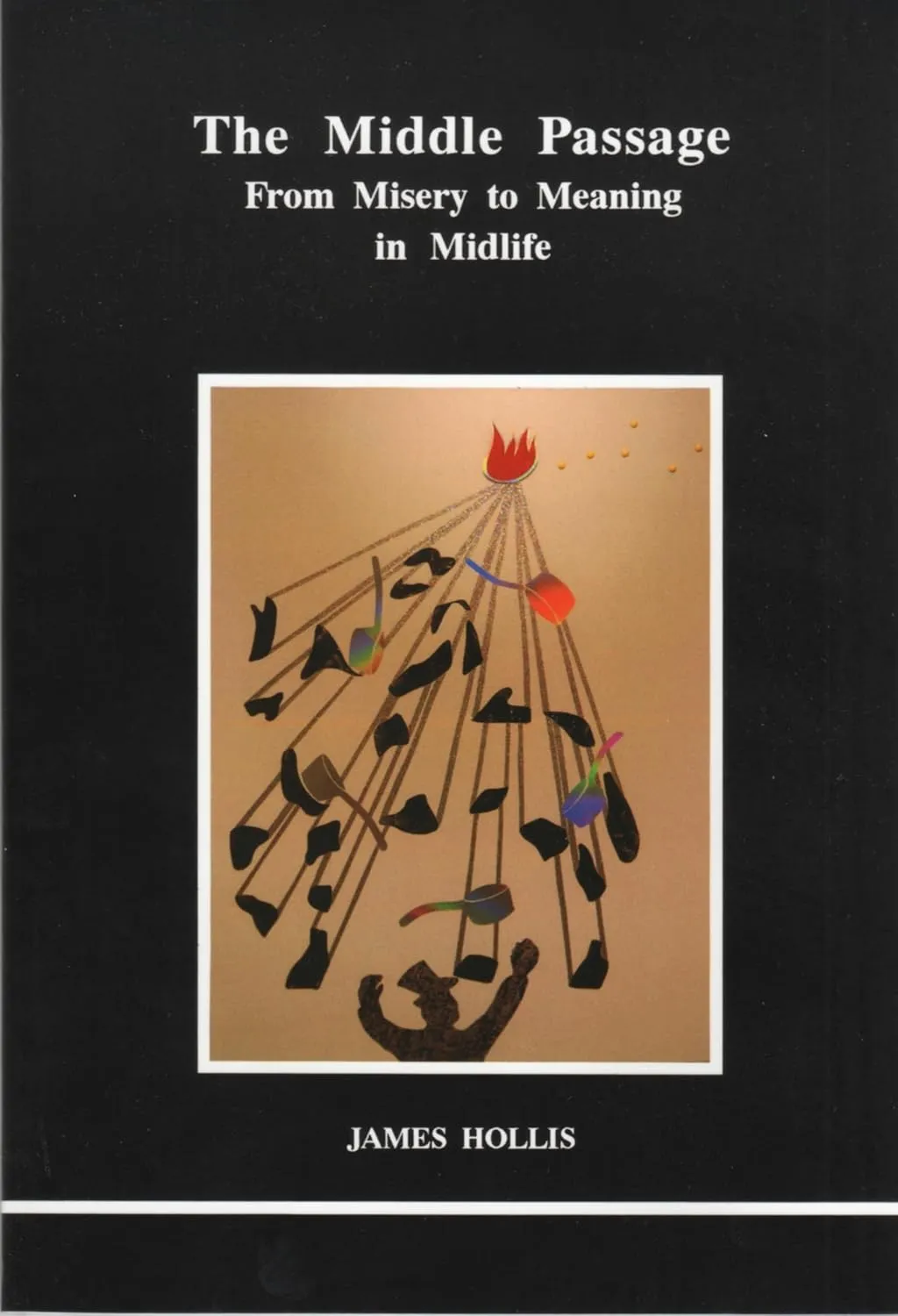
The key point: this personality works. It gets you through childhood, school, career, relationships. It’s functional. But it’s a collage of other people’s expectations and your adaptive responses to them. The middle passage begins when this provisional self starts breaking down — when the strategies that got you here stop working, and the life you built feels hollow despite looking right from the outside.
The Midlife Crisis as Summons
Hollis reframes the midlife crisis not as a breakdown but as a summons. The provisional personality produces diminishing returns. Achievement fails to satisfy. The shadow — everything you repressed to maintain the functional self — accumulates pressure until it forces its way into consciousness.
The crisis presents a fork. Refuse the summons: double down on old strategies, numb out, chase a younger version of the same life. New car, new partner, same patterns. Or accept the summons: let the provisional personality collapse, endure the disorientation, and begin asking who you actually are beneath the scripts.
Depression and anxiety aren’t pathology here — they’re signals. The psyche saying the life you’re living is too small for the person you’ve become.
Individuation
Jung’s term for the process of becoming who you actually are. Not self-improvement — not optimizing the provisional personality — but dismantling it to find what’s underneath.
This means confronting your shadow (the repressed parts running your life from the basement), withdrawing projections (recognizing that what triggers you in others is often your own unowned material), and differentiating from complexes (the emotionally charged patterns like “I’m not good enough” that hijack behavior).
Whatever you sacrificed to maintain the provisional personality now demands its due. The creative impulse you buried, the values you suppressed, the way of being you abandoned to fit in. It’s grueling work, never complete. The unconscious is inexhaustible. The point is the ongoing relationship with it, not arrival.